What struck me about the incorrect non-calls (1,068) is that these are fouls that the referees miss. Referees are missing around 1 in 4 fouls. While the error rate for non-calls is 8.33% compared to 5.22% for call, there are a lot more non-calls. What would be the implications for the game if they started calling more fouls? Players would probably adjust and foul less. But there would almost certainly be more stoppages. What would be the implications for the consumers at the venue and watching the broadcast? Would it disrupt the flow of the game and, therefore, enjoyment? It is difficult to know.
|
By John Considine As has been documented here previously, the Last Two Minute Reports (LTMR) produced by the NBA provide the kind of data that is difficult to get elsewhere. These reports provide expert opinion on the decisions made by officials during the last two minutes of an NBA game. Every decision is evaluated as correct or incorrect. Critically, this includes non-calls, i.e. potentially foul play but deemed not to be so. Data from the LTMRs show that just over 80% of decisions are non-calls. This is not surprising as one could argue that there is a non-call ever second. Below is a sample of data taken from the LTMRs. This data is taken from a paper published in the Journal of Law and Economics. The authors, Naci Mocan and Eric Osbourne-Christenson, examine each of the categories for racial bias and find in-group bias in the 1,068 incorrect non-calls.
What struck me about the incorrect non-calls (1,068) is that these are fouls that the referees miss. Referees are missing around 1 in 4 fouls. While the error rate for non-calls is 8.33% compared to 5.22% for call, there are a lot more non-calls. What would be the implications for the game if they started calling more fouls? Players would probably adjust and foul less. But there would almost certainly be more stoppages. What would be the implications for the consumers at the venue and watching the broadcast? Would it disrupt the flow of the game and, therefore, enjoyment? It is difficult to know. By Robbie Butler
The 17th European Sport Economic Association Conference will be held from the 19th to the 21st of August, 2026 at the University of Zurich, Switzerland. It will be the second time the Swiss city has hosted the event with further details on abstract submission, fees and registration availbale here. Hosted at the prestigious University of Zurich, this three-day event brings together leading academics and industry expertsfrom around the world. Set against the stunning backdrop of Zurich—one of Europe’s most vibrant and intellectually rich cities—the conference offers an environment for exchanging ideas, presenting new work, and building collaborations in sports economics. As usual, the event is preceded by the annual PhD Workshop, running from the 17th to the 19th of August. Details on this can also be found at the link above. By Robbie Butler
I am just old enough to remember Ray Houghton’s goal at Euro ’88. It’s not even the first Irish goal I remember. Paul McGrath has that honour: Ireland 2–0 Bulgaria, October 1987. This was the great arrival of the Republic of Ireland in major “finals” on the international stage. I was lucky to catch the first great wave of Ireland’s football team: Euro ’88, Italia ’90, USA ’94. RTÉ'S Darragh Moloney named cities after Troy Parrott’s recent heroics in Budapest last week: Stuttgart, New York, and Vienna. He could have added Genoa (probably our most famous hour) and Lille. I was lucky enough to see all of these. And seeing them made me want to replicate our team’s achievements when I was young. How do we do this? We buy the jersey. I had various Ireland kits from 1988, 1990, 1994, and 2002. I did buy some after this, but not to the same extent; age and the performance of the team are probably to blame. What has been noticeable in recent years is the failure of children here to wear the green jersey I wore so proudly as a child. Instead, you are more likely to see Liverpool, Man City, PSG, Barcelona, even Inter Miami or Al Nassr. The world has never been smaller, and global clubs have never been bigger, but it still feels like something of our own has been slipping away. There may now be light at the end of the tunnel. Last week at underage soccer training, two children turned up in green Ireland jerseys. It was just days after Parrott’s famous hat-trick. It felt like a small but genuine spark; the kind of moment you hope might catch. If Ireland can manage to qualify for the World Cup next summer, only Czechia and either Denmark or North Macedonia stand in the way, I suspect the number of children wearing Irish jerseys will rise exponentially. When the national team is vibrant, it pulls people back in: pride, identity, belonging. The jersey becomes more than just a shirt again. Good news for revenue at an association ridden with debt. And also good news for a country that rallies around its football team. The bad news is that there appear to be supply-side issues. An online search for kids’ Ireland jerseys returned a blank. Demand seems to have soared in recent days following the heroics in Hungary. Let us hope supply can be ramped up quickly and that this is the start of the good times returning on all fronts. By David Butler
Sports broadcasting markets across Europe have been disrupted more than usual by piracy - on this iteration of the piracy cycle IPTV is the culprit. Recently DAZN investigated losses through piracy in France; they estimated a loss of 400 million euros per annum, although I think they are assuming that the alternative to piracy is consumers just buying a subscription, which is not a reasonable assumption. Just last week La Liga President Javier Tebas called piracy “the biggest challenge in the world of football and the sports industry in general.” He claimed it cost La Liga roughly €700 million each season. He appealed to the 10 commandments and consumer morals relating to stealing. He stopped there however with the biblical references and did not extend to ‘Thou shalt not covet’ or make any reference to greed… My view is that IPTV could grow without the internet service providers stepping in. At present, ISP's may not have an incentive to do so, but legal changes could make it a requirement. At present droves of fans are out on the high seas and this could increase. Why? The current price points of services, the proliferation of streaming firms holding rights (which require consumers to buy multiple subscriptions) and the absence of broadcaster competition at a match level. It is now very expensive for the consumer to view the matches of one club legally. The music industry had to learn a similar lesson historically, perhaps sports broadcasters will eventually learn it too. By Robbie Butler
“If only Ireland was in South America.” These were the words I used here in 2018 when Denmark ended our chances of qualifying for the World Cup in Russia. We find ourselves in a familiar situation once again. The Danes may be on the horizon soon. Ireland are back in a UEFA playoff, this time facing Czechia and, should we advance, Denmark. The presence of Denmark on the path is an uncomfortable reminder of 2017, when they took the final European place at our expense. Some stories repeat themselves whether we want them to or not. In 2018, I wrote about the challenges European teams face when qualifying for the World Cup, and how the structure of global qualification often highlights deep inequalities between confederations. Six years later, those themes have not only persisted — they have become even more noticeable. Take Bolivia, for example. They have lost 10 of their 18 matches in South American qualifying and finished 7th out of 10 teams. Yet they remain alive, with a playoff route that runs through Suriname and then Iraq. To still be in contention after losing more than half of your matches is striking, and it calls attention to the contrast with UEFA. Ireland’s potential opponents — Denmark (ranked 21st) and Czechia (ranked 44th) — are considerably stronger than Bolivia’s possible playoff rivals. Suriname, ranked outside the top 120, and Iraq, ranked in the 50s, present a very different competitive landscape. The disparity in difficulty is hard to ignore. The 2026 World Cup expansion was expected to ease the pressure on European teams. UEFA does indeed have additional places, and the playoff format now includes group runners-up plus high-performing Nations League sides. But in practice, the challenge remains steep. Strong teams are concentrated in Europe, and the playoff system continues to produce paths where competitive balance varies dramatically from one confederation to another. In 2018, I suggested that geography plays an outsized role in determining who qualifies. The evidence today still supports that view. South America’s round-robin format ensures that even teams with poor records remain within reach of qualification. Other regions, too, offer second chances that would be unthinkable in Europe, where a single dip in form can drop a team from automatic qualification into a high-pressure playoff against well-ranked opponents. This is not to criticise Bolivia or any other nation taking advantage of the system in place. Every team can only play the matches assigned to them. But it does raise a broader question about global competitive balance, and whether expansion alone is enough to address long-standing structural differences across confederations. For Ireland, the task is once again a demanding one. Czechia are well-organised and experienced in knockout scenarios, and Denmark need no introduction. Our route involves difficult, tightly contested European fixtures, while elsewhere teams with significantly weaker records continue to progress. In 2018, I concluded with the thought that things might be different “if only Ireland was in South America.” Today, looking at the contrasting paths laid out for the 2026 qualifiers, that sentiment still resonates. The World Cup may be expanding, but the inequalities in qualifying remain very much intact. By Luke Walsh
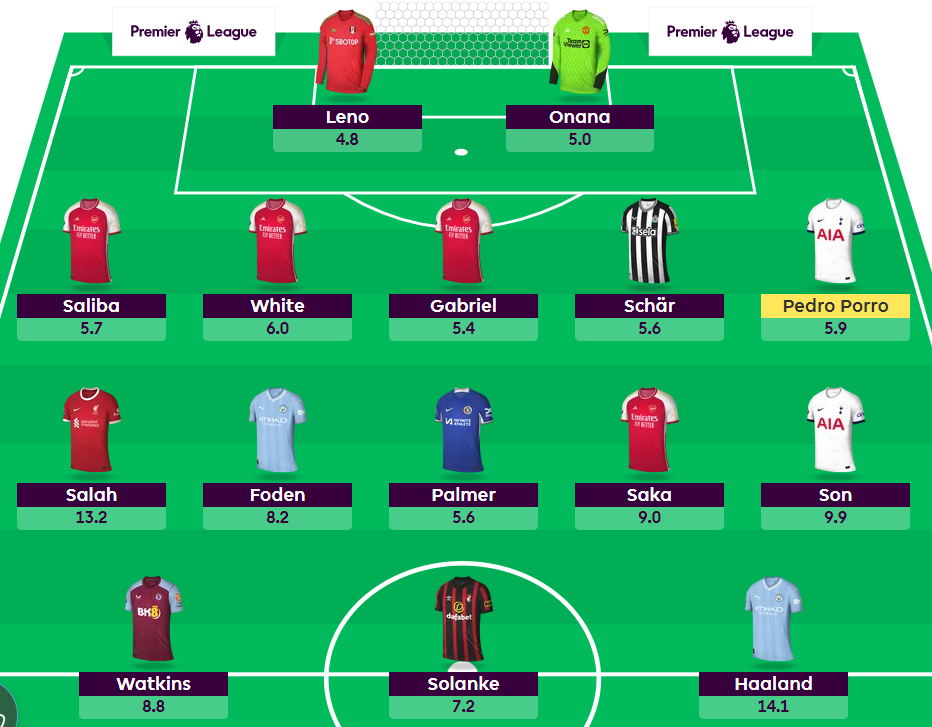
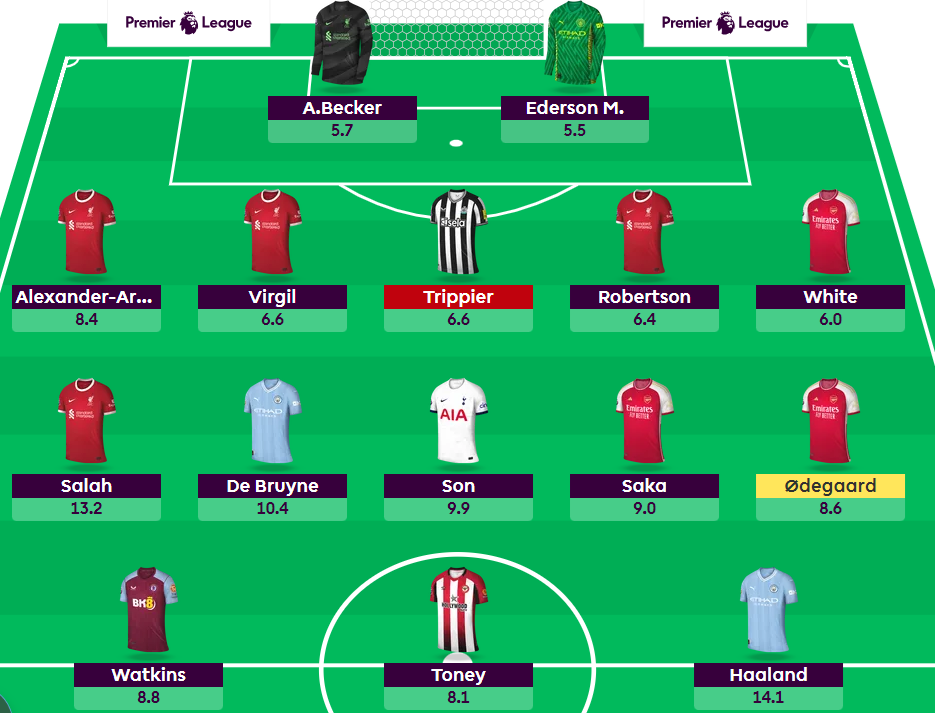
Fantasy Premier League might look like a simple fan game, but this season it has become a genuine optimisation problem. Premium assets are underperforming, defenders and mid priced midfielders are dominating, and the underlying structure of the league has shifted. The question is simple: what changed, and why is the value now concentrated where few managers expected it to be? Team level analysis offered one of the clearest findings. Arsenal, Manchester United and Everton performed significantly better at home, while Tottenham and Leeds recorded stronger away performances. Midfielders were especially affected and averaged 1.4 points more at home. These differences matter. Should a midfielder with strong home bias be prioritised in tight benching decisions? Position based testing produced the most striking result. Defenders returned the highest value, with 13/19 classified as very consistent and 9 exceeding expected value. Midfielders produced the highest points per match but defenders were the most efficient relative to cost. Forwards ranked lowest once the influence of a single outlier was removed… This season’s conditions amplify the trend. Pundits have already labelled it the “set piece season” and the numbers support that description. Increased points for both defenders and midfielders due to DEFCON rule environment and set-piece goal involvements. Mid priced and enabler midfielders have outperformed premium midfielders by 5.3 and 4.8 points per match compared to 4.2 for premium options. Our very own Josh Cullen - costing only £5m, is just trailing £14.2m Mohammed Salah by one point. This is unheard of in previous seasons. The implications are clear. Defenders are now the most efficient assets in Fantasy Premier League and support the case for defender heavy formations such as 4-4-2 and 4-5-1. Mid priced and enabler midfielders, with set piece involvement or strong home performance, offer genuine value advantages. Premium attackers and midfielders no longer justify routine selection and must be evaluated on evidence rather than reputation. Questions need to be asked when picking a team. How much of the game is based on enjoyment? Does a clean sheet generate the same excitement as a forward’s goal? Are FPL managers adapting to the new data environment, or does anchoring to long standing strategies such as 3-4-3 prevent efficient decision making? The season will continue to evolve, but the data offers a consistent message. In a game increasingly shaped by analytical thinking, the strongest edges come from asking the right questions and trusting the evidence that follows, even when the conclusions might not be the most enthralling. Luke Walsh is a a second-year undergraduate student at UCC on the BSc Finance programme. By John Considine I often fantasise about conducting some unethical experiments in a sporting context. My favourite involves surreptitiously swapping children in maternity hospitals. This unnatural experiment would allow me to test if the ability to play particular sports is down to nature or nurture. Another experiment involves surreptitiously installing recording technology in the dressing (locker) rooms of both teams in a game to establish if “what was said in the room” really makes a difference. A third experiment came to mind this morning after reading an article written by Murat Mungan. The article is in the latest edition of the Review of Law & Economics. For this experiment I would need to measure the reaction of “sports economists” to the paper, specifically whether the person would read the article after an initial scan of its content. My guess is that nurture would determine the reaction. Those nurtured, and working in, the statistical approach to (sport) economics might decide against it. That would be the vast majority of economists because the subject has become increasingly empirical since the 1970s (as explained in research by Beatrice Cherrier and Roger Backhouse). Half a century ago, as the tide was turning, Alex Leijonhufvud wrote a humorous piece called “Life Among the Econ”. He joked about the ability to econs to build “modls”. Those who employed statistical method were called the O’Metrs (surely an Irish connection!) and were involved in strip-mining. Murat Mungan builds a “modl” to examine real-time review standards and he uses Video Assistant Referee (VAR) to illustrate. (Another experiment might be to ask economists “what is VAR?”. My guess is that most would say a Vector Auto Regressive model). For my part, I enjoyed Mungan’s paper. Maybe those with an emotive reaction to VAR will read the paper. Mungan suggests the analysis can be extended to body cameras in law enforcement and the oversight of military operatives such as snipers. Other emotive subjects. By David Butler
In the last few weeks Aston Villa have been working hard to retain their human capital and protect their value - John McGinn has signed a new contract to 2028, Matty Cash signed a new contract until 2029 and Morgan Rodgers new contract will keep in at the club until 2031. No doubt these were all lucrative deals for the players and Capology estimates that McGinn, Cash and Rodgers will earn gross salaries of £6,760,000, £5,200,000 and 7,800,000 in 2025-2026 seasons respectively. What aspects of performance command new contract pay awards? In a recent open access paper - Do sports analytics affect footballer pay? – Alex Farnell, Rob Simmons and I investigate the determinants of pay for players offred a new contract either through a renewal or a transfer. Surprisingly, we found that few of our advanced performance metrics help to explain player salary, such as expected goals or expected assists. The evidence points toward more simple metrics such as goals and pass completion rates still being favoured by clubs. Unsurprsingly, accruing senior international status positvely affects pay, so McGinn, Cash and Rodgers all likely commanded a premium for donning Scottish, Polish and English shirts. By Robbie Butler I have had many a rant about VAR on this forum. I must be nearly in double figures for posts. The system has changed how we consume the game and is an entirely different product, in my opinion. I no longer watch the game as I once did and feel relief rather than excitement when a goal is scored by my team. The unintended consequences are incredible. Last night's Liverpool–Real Madrid game was yet another that got little coverage. Many people are so caught up in the incident that they miss the obvious. The moment centred on a free kick awarded to Liverpool on the edge of the Real Madrid penalty area, after Dominik Szoboszlai's shot struck the hand of Aurélien Tchouaméni. Referee István Kovács’ decision then went to VAR. Was the handball inside the box? The review clearly showed that it was. Watching the replay, I thought the handball decision — and awarding a free kick — was harsh. Anyone that understands the game (not just the rules) would probably agree. But when the referee gave this decision as a free — that is important — VAR does not have the power to overrule a freekick.
VAR can only intervene in four types of “clear and obvious errors” or “serious missed incidents”: goals, penalty decisions, direct red card incidents, and cases of mistaken identity. This was something different. Had the ball struck the player outside the box, a free kick would have to be awarded. Liverpool were penalised because the player was inside the box and VAR thought it was not a penalty. And to compound matters — what most people missed — is that if the referee had waved play on, Liverpool would have been awarded a corner! Because the referee awarded a free kick and because VAR was incorrectly applied — it was not a clear and obvious error, as the ball did strike the hand — Liverpool suffered three times. No free. No penalty. No corner. Instead, the ball dropped at the feet of goalkeeper Thibaut Courtois — an uncontested hop ball. By John Considine Lara Gillespie is Ireland’s latest world champion. Her gold came in the World Track Championship in cycling. The specific event being the elimination race. The race is also labelled “Devil Take the Hindmost”. Economists might think of it as a game of musical chairs because it can be linked to an analogy from The General Theory of Employment, Interest, and Money. The most famous analogy in that book is between the stock market and newspaper beauty contests. Nobel laureate, Richard Thaler, empirically examined a variation of the beauty contest with a "guess the number" competition run in the Financial Times. Contestants were asked to guess a number between 0 and 100. The winner would be the person who was closest to 2/3 of the average of all the guesses. Backward induction might suggest the best guess would be zero. That was not the winning guess. Thaler used the finding to suggest that humans don't think like Homo Economicus. Cycling’s elimination event provides data on how people play a version of musical chairs. It can be used to examine the “greater fool” theory of investment. Here are Keynes’s words on the issue taken in from the paragraph that immediately precedes his beauty contest analogy. “This battle of wits to anticipate the basis of conventional valuation a few month hence, rather than the prospective yield of an investment over a long term of years, does not even require gulls amongst the public to feed the maws of the professional; - it can be played by the professionals themselves. For it is, so to speak, a game of Snap, of Old Maid, of Musical Chairs … when the music stops some of the players will find themselves unseated.” Lara Gillespie successfully played a version of musical chairs at high speed. One of my favourite books written in the immediate aftermath of the Great Recession is John Cassidy’s How Markets Fail: The Logic of Economic Calamities. Cassidy says “Like John von Neumann, Keynes believed that simple parlor games have much to teach economists: they feature the sort of strategic interactions that are largely absent from orthodox economics”. The greater use of data from sporting contests might be addressing that issue. |
Archives
November 2025
About
This website was founded in July 2013. Categories
All
|


RSS Feed