The Economics of Sport
  • Sports Economics
  • About
  • Workshop
  • Selected Publications
  • Book Reviews
  • A Primer on Gaelic Games
  • Upcoming Events
  • Media
  • Education
  • Resources & Links

Adidas And The World Cup Ball

9/11/2022

 
By Robbie Butler

A nice story of monopoly. Adidas has held the monopoly right over production of the FIFA World Cup ball since 1970. As is often the case today, I get requests for the latest sporting equipment on sale. The 2022 Qatar World Cup football retails at €28. I have never paid €28 for a football in my life but the economics of the situation make this price point possible. 

Since the 1970 World Cup in Adidas has been the official and sole supplier of the World Cup ball. The Germany company began production of footballs in 1963 and did not supply England's 1966 tournament. Instead the official ball - the Challenge 4-Star - was made by British sporting goods company Slazenger. The 1966 ball was made with 18 rectangular panels and was orange in colour. Marking and branding was difficult to see in action.

Adidas would change this forever in 1970. The Telstar was the first 32-panel black-and-white ball used. Only 20 balls were supplied by Adidas for the competition. A brown ball was used during the Germany versus Peru game, while a white ball was used during the first half of Italy versus Germany.
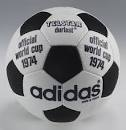
PictureTelstar Durlast - Germany 1974
The most famous of footballs would be followed up by the Telstar Durlast in 1974; the first waterproof ball.

As the years progressed, adidas innovated with the design and composition of the ball. In 1999 the Germany maufacturer produced their first ball for the Women's World Cup - the Icon - and followed this up in 2011, 2015 and 2019. 

The 2018 installment - the Telstar 18 - even included a colour change for the knockout rounds.  

And while countries, hosts and players have all changed through the years, adidas's monopoly on supply has remained constant. In the end I will probably be pressured into spending €28. I can rationalize it by telling myself the tournament only comes once every 4 years.   
Women in Sport Economics, Management and Sociology - Survey

8/11/2022

 
Prof. Dr Pamela Wicker (PI) and Dr Katrin Scharfenkamp Bielefeld University, Dept. of Sports Science are working on a research project funded by the German Federal Ministry of Education and Research for which they kindly ask for your support.

The research is exploring the visibility and perception of professors in sports economics, sports management, and sports sociology, across universities from both a teaching and supervision perspective.

The researchers would be very happy if you interested and relevant readers could complete the survey at the following link https://www.soscisurvey.de/perception_professors_sport/.

The survey is targeted at students, PhD students, and postdoctoral researchers in the disciplines listed above. 

The survey should take between 5 and 10 minutes to complete and participants have the chance of winning a €10 prize at the end.

For more information on the entire project and an explanation of the individual modules, please visit www.wisems.org. 

Coopetition in the Market for Soccer Players

6/11/2022

 
By John Considine
Last ​month, Arsenal were held to a draw by Southampton.  Southampton were helped by a man-of-the-match performance by a stand-in full/wing back.  Southampton could not play Ainsley Maitland-Niles in that position because he was on loan from Arsenal.  Is it fair that Maitland-Niles can play against Arsenal's rivals but not against Arsenal?

"FIFA has recently released a project that could limit the number of out-going loans if they are conducted for 'commercial exploitation'.  Such reforms could put more pressure on teams that use or depend on loans".  These sentences come from a 2021 European Sports Management Quarterly paper.  In the paper, Antoine Feuillet and colleagues attempt to identify those clubs who might be sporting competitors but engaged in economic cooperation (and those engaged in economic competition and sporting cooperation).  It is in the market for player loans/transfers that there is this combination of competition and cooperation - known as coopetition.

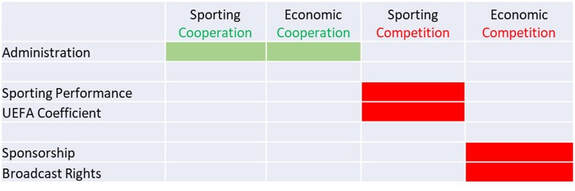
The table below illustrates the areas where the authors sees clubs as engaged in either competition or cooperation.  Cooperation is needed to administer the game.  To deliver the product.  Administration involves both sporting and economic cooperation.  Then there is sporting competition on the field as measured by a variety of outcomes, e.g. UEFA Coefficient.  There is economic competition for sponsorship and broadcast rights.
Picture
Using the above variables they classify the clubs into different groups.  At one end is the group involving clubs like PSG.  At the other end are clubs "with few resources and a need for players, they use the loan system (and free agents) to strengthen their recruitment at lower cost".  Included in this list are clubs that most people probably have not heard of, e.g. Arles, Avignon, Bastia, ..., Vannes.  In between there are other groupings.  My guess is that applying a similar analysis to the English Premier League would find that Arsenal and Southampton are in different groups.  The strategic choices open to Arsenal are not those open to Southampton.

​Beat The Bookies 2.0 - Week 12

4/11/2022

 
Recap of Week 11
Returns €51.25
Net Returns €1.25
 
An unlucky weekend last time out with Real Madrid managing only a draw against Girona. Real were on top throughout but just didn’t capitalise on their many chances they created. Still, the pot made €1.25 which is really a break even outcome. Inter crushed Samp which helped the pot not end up further in the red. The ‘both teams to be carded’ bet has worked well and in the heavy weight clashes it’s highly likely both teams will pick up at least one booking each. The heavyweight clashes this week are in the EPL and Serie A. See below
 
Week 12 selections:
Spurs vs Liverpool
Both teams to receive a card @1.33
 
Juventus vs Inter Milan
Both teams to receive a card @1.25
This will be placed as a double €50 combined odds @1.67
Potential Net returns: €33.50
 
The pot is €50.95 in deficit after 11 game weeks.
Total outlay €550
Total returns €498.75

Flemington and Flooding

3/11/2022

 
By Robbie Butler

In the early hours of Tuesday morning in this part of the world the famous Melbourne Cup went to post at Flemington Racecourse in Australia. There was not much hype about the race this year over here (there normally is) largely because there was little European interest, and no Irish runner. This despite Irish winners of the race as recently as 2020 and 2017.

The event lived up to its billing as "the race that stops a nation" and top weight Gold Trip won a thrilling renewal of the Melbourne Cup. And while those that owned and trained the horse probably celebrated into the evening and night, spare a thought for residents nearby.

While sport is often used as an example of a positive externality (and there are many examples of this), negative externalities are less often cited. But Flemington Racecourse provides us with one.

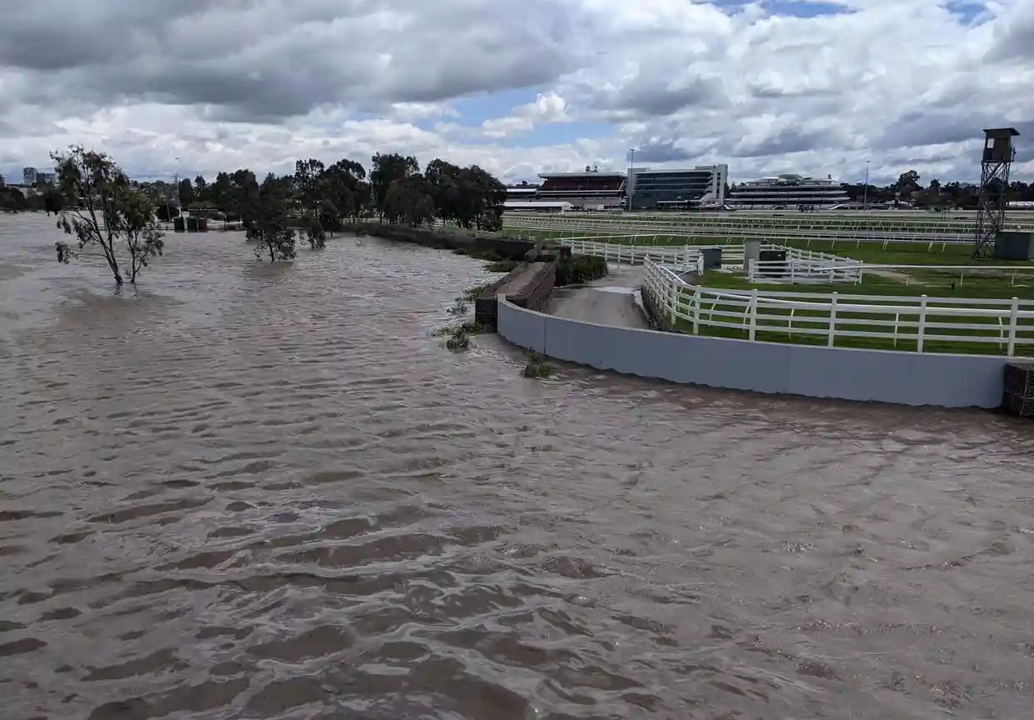
In 2006 course owners were granted permission to build a floodwall around the track to prevent the course from becoming flooded. The wall was completed the following year. The 2.5 meter wall protects the racing surface from the Maribyrnong River which flows right next to the course.  

However, because the racecourse is a natural flood plain for the river, excess water now has to accumulate elsewhere. That "elsewhere" is somebodies home. The picture below demonstrates just how high this water can get.
Picture
Source: https://www.theguardian.com/australia-news/2022/oct/21/did-the-wall-that-saved-the-melbourne-cup-racetrack-contribute-to-the-flooding-of-245-homes
The full story is carried in The Guardian and provides an overview of the river's journey towards the course and where the water now lodges.

In a world of ever-more dramatic climate events one can only assume this flooding will get worse. The external effects of building this wall, to protect a sport institution in Australia, have undoubtedly led to unintended consequences and a negative externality. 
Forward>>

    Archives

    June 2026
    May 2026
    April 2026
    March 2026
    February 2026
    January 2026
    December 2025
    November 2025
    October 2025
    September 2025
    August 2025
    July 2025
    June 2025
    May 2025
    April 2025
    March 2025
    February 2025
    January 2025
    December 2024
    November 2024
    October 2024
    September 2024
    August 2024
    July 2024
    June 2024
    May 2024
    April 2024
    March 2024
    February 2024
    January 2024
    December 2023
    November 2023
    October 2023
    September 2023
    August 2023
    July 2023
    June 2023
    May 2023
    April 2023
    March 2023
    February 2023
    January 2023
    December 2022
    November 2022
    October 2022
    September 2022
    August 2022
    July 2022
    June 2022
    May 2022
    April 2022
    March 2022
    February 2022
    January 2022
    December 2021
    November 2021
    October 2021
    September 2021
    August 2021
    July 2021
    June 2021
    May 2021
    April 2021
    March 2021
    February 2021
    January 2021
    December 2020
    November 2020
    October 2020
    September 2020
    August 2020
    July 2020
    June 2020
    May 2020
    April 2020
    March 2020
    February 2020
    January 2020
    December 2019
    November 2019
    October 2019
    September 2019
    August 2019
    June 2019
    May 2019
    April 2019
    March 2019
    February 2019
    January 2019
    December 2018
    November 2018
    October 2018
    September 2018
    August 2018
    July 2018
    June 2018
    May 2018
    April 2018
    March 2018
    February 2018
    January 2018
    December 2017
    November 2017
    October 2017
    September 2017
    August 2017
    July 2017
    June 2017
    May 2017
    April 2017
    March 2017
    February 2017
    January 2017
    December 2016
    November 2016
    October 2016
    September 2016
    August 2016
    July 2016
    June 2016
    May 2016
    April 2016
    March 2016
    February 2016
    January 2016
    December 2015
    November 2015
    October 2015
    September 2015
    August 2015
    July 2015
    June 2015
    May 2015
    April 2015
    March 2015
    February 2015
    January 2015
    December 2014
    November 2014
    October 2014
    September 2014
    August 2014
    July 2014
    June 2014
    May 2014
    April 2014
    March 2014
    February 2014
    January 2014
    December 2013
    November 2013
    October 2013
    September 2013
    August 2013
    July 2013

    About

    This website was founded in July 2013.

    RSS Feed

    Categories

    All
    American Football
    Athletics
    Baseball
    Basketball
    Behavioural Economics
    Boxing
    Broadcasting
    Competitive Balance
    Cricket
    Cycling
    Darts
    David Butler
    Declan Jordan
    Drugs
    Ed Valentine
    Epl
    Esports
    Expenditure
    F1
    Fifa World Cup
    Finances
    Funding
    Gaa
    Gaelic Games
    Gambling
    Game Theory
    Gary Burns
    Geography
    Golf
    Greyhound Racing
    Guest Posts
    Horse Racing
    Impact Studies
    John Considine
    John Eakins
    League Of Ireland
    Location
    Media
    Mls
    Mma
    Olympics
    Participation
    Paul O'Sullivan
    Premier League
    Regulation
    Research
    Robbie Butler
    Rugby
    Simpsonomics
    Snooker
    Soccer
    Spatial Analysis
    Sporting Bodies
    Stephen Brosnan
    Swimming
    Taxation
    Teaching
    Technology
    Tennis
    Transfers
    Uefa
    Ufc
    World Cup
    Wwe

Powered by Create your own unique website with customizable templates.